

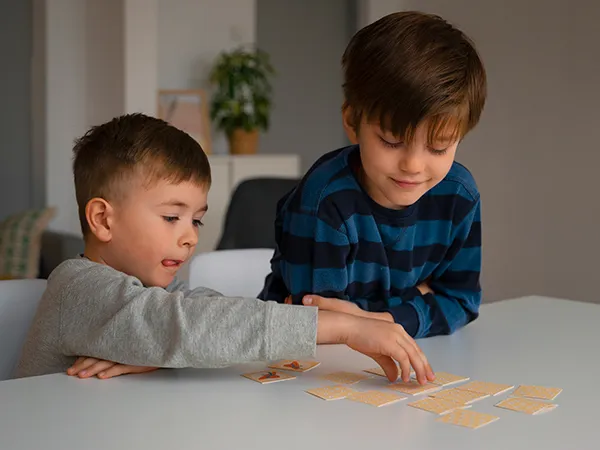
How Children Process the World Around Them
Sensory development refers to how a child receives, interprets, and responds to information from their environment through sight, sound, touch, movement, and other senses. This system plays a key role in early communication, learning, behavior, and emotional regulation.
At Stars Assessment Center, we help families understand how sensory patterns may influence early developmental progress and everyday functioning.
Different Ways Children May Experience Sensory Input
Sensory processing differences can appear in a variety of ways, including:
Hypersensitivity (Over-Responsiveness)
- Strong reactions to sounds, lights, or textures
- Avoidance of certain clothing or foods
- Discomfort in busy or noisy environments
Sensory-Seeking Behaviors
- Frequent movement (jumping, spinning, crashing)
- Touching objects or people excessively
- Seeking strong sensory input through play
These patterns may vary in intensity and can appear differently in each child.
Sensory Differences That May Affect Communication
Hearing and vision play a foundational role in early development. When these systems are not processing information clearly, children may show differences in communication, behavior, or learning.
Possible signs include:
- Not consistently responding to sounds or voices
- Difficulty locating where sounds are coming from
- Limited visual tracking of objects or faces
- Frequent squinting, blinking, or eye rubbing
- Delayed response to name or spoken cues
These signs may not always indicate a medical issue but can influence developmental progress and interaction.
Early Sensory Patterns That Can Be Easy to Miss
Some sensory-related differences are subtle and may become more noticeable over time. Families may observe:
- Overreaction or underreaction to everyday sounds
- Difficulty calming in stimulating environments
- Preference for certain textures, foods, or routines
- Challenges with attention in busy spaces
- Unusual fascination with lights, movement, or objects
These behaviors can impact how a child engages with learning and communication.
Why Sensory Processing Matters in Early Childhood
Sensory processing influences many areas of early development, including:
- Communication and language learning
- Attention and focus
- Emotional regulation and behavior
- Play and exploration
- Social interaction and engagement
When sensory processing is different, children may experience challenges in how they respond to their environment.
Signs That Lead Parents to Look Deeper
Parents often seek guidance when they notice:
- Strong reactions to sound, touch, or movement
- Delayed or inconsistent response to name
- Concerns about hearing or vision behavior
- Difficulty engaging in play or learning activities
- Sensory sensitivities affecting daily routines
At Stars Assessment Center, these concerns are explored through structured developmental screening focused on early childhood sensory patterns.
Early Insight Into Sensory Development Can Make a Difference
Sensory-related differences can influence how children learn, communicate, and interact.
Early screening can help:
- Identify sensory processing patterns early
- Clarify hearing and vision-related concerns
- Understand behavioral responses in context
- Support communication and learning development
- Guide families toward appropriate next steps
Early awareness helps reduce uncertainty and supports better developmental understanding.
Why Families Trust Stars for Sensory & Screening Concerns
Early Childhood Focus (Ages 0–3)
Specialized experience in infant and toddler developmental screening.
Whole-Child Development Approach
We evaluate sensory, communication, motor, and cognitive development together.
Clear and Supportive Explanations
Findings are shared in simple, family-friendly language.
Early Awareness Focus
Designed to help families identify sensory-related differences early.
Supportive Family Experience
Focused on reducing uncertainty and guiding next steps.
Multilingual Support Available
Services offered in Spanish, Vietnamese, Hindi, and Mandarin.
Serving Northern & Central California
Accessible developmental screenings for families across multiple communities.
Understanding Sensory Patterns Through Early Screening
Developmental screenings help observe how a child responds to sensory input such as sound, light, movement, and touch.
They may help identify:
- Sensory sensitivity or avoidance patterns
- Attention and engagement responses
- Early hearing or vision-related concerns
- Behavioral reactions to environmental input
- Differences in sensory processing that affect development
The goal is to better understand how sensory experiences may influence overall development.
Understand What Sensory Responses May Mean for Your Child
Early screening can help identify whether sensory, hearing, or visual responses are affecting development.
Stars Assessment Center provides developmental evaluations across Northern and Central California.
Frequently Asked Questions
They refer to differences in how a child responds to sound, touch, movement, or visual input.
Overreaction, underreaction, or strong sensory-seeking behaviors may be early signs.
Yes, sensory processing differences can influence attention, communication, and behavior.
No, sensory variations are common and require professional evaluation for clarity.
Early screening helps identify sensory patterns that may affect development and daily functioning.